

MENU
HOUSING THE WORLD SAFE AND RESILIENT CITIES AND COMMUNITIES

Traditional Crafts

Traditional Weaving

Traditional Weaving

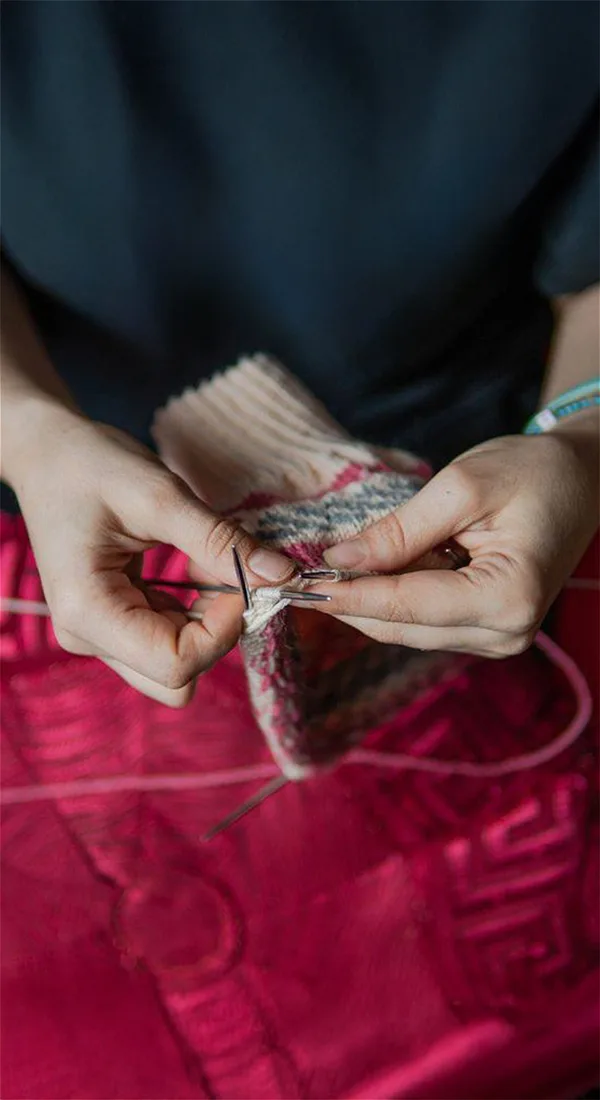
Across Azerbaijan’s regions, long-standing livestock traditions have ensured an abundant supply of wool, which has been used with skill and ingenuity throughout the centuries. The crafting of carpets, flat-weave rugs, kilims, socks, gloves, bags, shawls and other woollen goods developed not merely to meet daily needs, but as a significant art form reflecting the people’s aesthetic sensibilities, worldview and cultural identity.

These items were particularly vital in harsh climatic conditions, providing essential protection and comfort. At the same time, the trade in wool and woollen products played an important role in fostering economic ties and exchange between different regions of the country.

Traditional weaving in Azerbaijan has never been simply a matter of production; it has long formed an integral part of social and cultural life. In both rural and urban communities, women worked collectively - preparing the yarn, dyeing it with natural pigments and weaving the finished textiles - passing down their knowledge and skills from one generation to the next. The use of natural dyes, distinctive regional motifs and carefully balanced compositions has lent this craft both richness and remarkable diversity.

Each region developed its own distinctive system of patterns. Far from being purely decorative, these motifs function as visual codes, carrying symbolic meanings and elements of family memory. In many cases, the origin of a woven piece can be identified simply by studying its design. This characteristic enhances the significance of Azerbaijani weaving not only as a material craft, but also as an important strand of intangible cultural heritage.

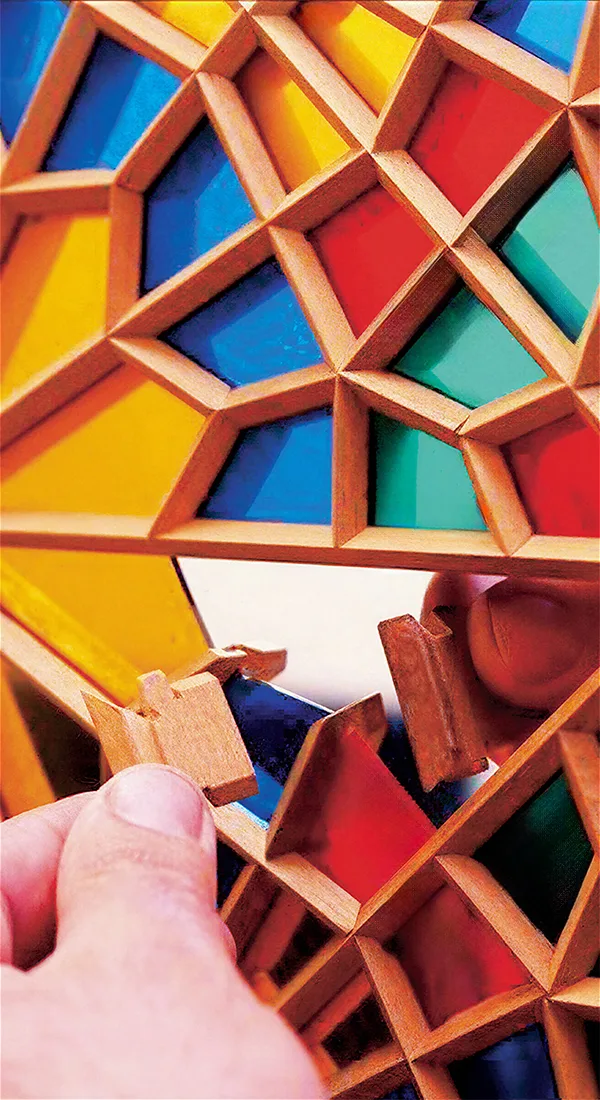
Shabaka Art

Shabaka Art

Among Azerbaijan’s rich craft traditions, shabakaoccupies a particularly distinguished place, regarded as one of the most striking expressions of the country’s architectural and decorative-applied arts heritage. Composed of finely interlocked wooden elements and coloured glass, and distinguished by its intricate stained-glass compositions, this art form is widely seen as a defining feature of Azerbaijani architecture.

Historically, some of the coloured glass used in shabaka panels was imported from the island of Murano near Venice - a detail that reflects the longstanding ties between local craftsmanship and wider networks of international trade and cultural exchange.

Today, shabaka remains one of the rare craft traditions still actively practised, particularly in the city of Shaki. Passed down through generations, it is assembled entirely by hand without nails or adhesive, relying on precisely calculated geometric patterns - a process that calls for exceptional craftsmanship, mathematical precision and years of experience.

In the making of shabaka, craftsmen typically use high-quality woods such as walnut, oak and lime. The timber is first treated and carefully dried, then cut with millimetre precision into small components. These pieces are assembled alongside coloured glass - usually no more than three millimetres thick - to create intricate and finely balanced compositions.

Kelaghayi

Kelaghayi

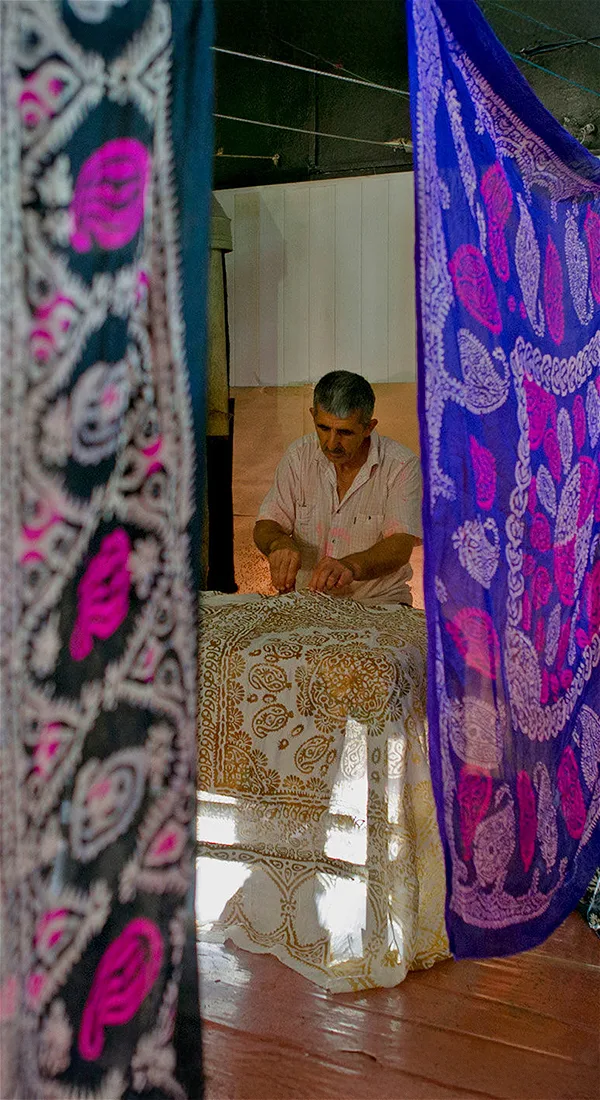
Silk-making has long been one of the defining strands of Azerbaijan’s rich craft tradition, closely intertwined with the art of kelaghayi. Renowned for its delicacy and refined aesthetic, the kelaghayi holds a special place in the traditional attire of Azerbaijani women. Adorned with intricate and visually striking patterns, this silk headscarf symbolises values such as love, beauty, peace and harmony.

The making of a kelaghayi is a multi-stage process requiring considerable skill. Crafted exclusively from pure silk, the square scarf is dyed and patterned using specialised techniques.

Today, the tradition continues to thrive in various regions of Azerbaijan, particularly in historic silk centres such as Shaki and Basqal, where the craft is both preserved and further developed.

Regarded as a symbol of grace and femininity, the Azerbaijani kelaghayi remains an important expression of national identity. In recognition of its historical and cultural significance, “The Symbolism and Traditional Art of the Kelaghayi” was inscribed in 2014 on UNESCO’s Representative List of the Intangible Cultural Heritage of Humanity.

Pottery

Pottery

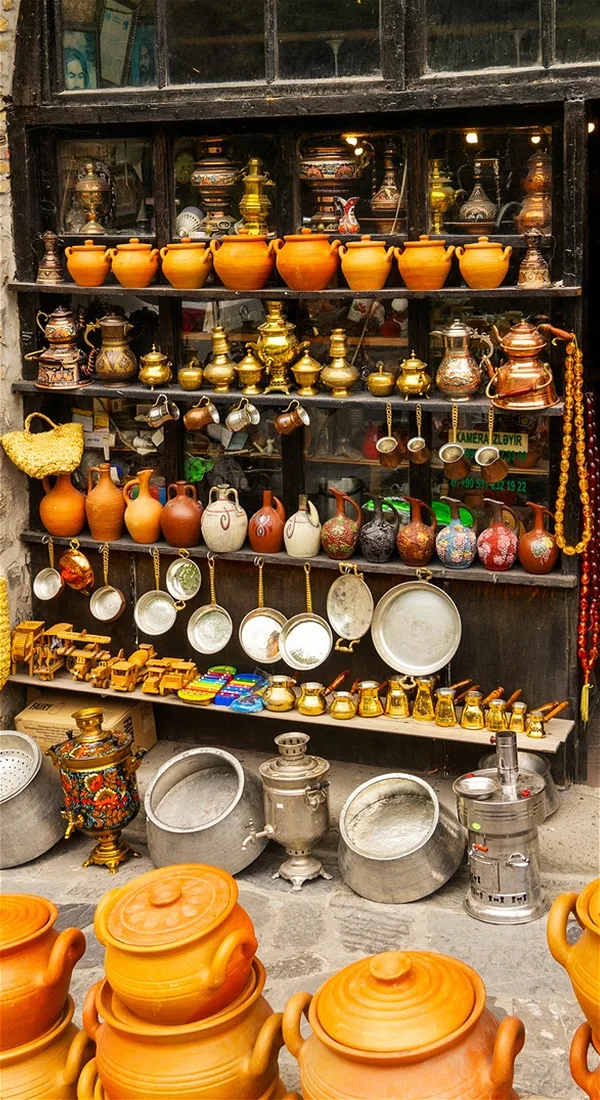
Azerbaijan’s pottery tradition rests on abundant natural resources and centuries of accumulated craftsmanship. Of the 128 recognised types of clay found worldwide, 98 occur in Azerbaijan - a diversity that has long supported the craft’s development. Archaeological discoveries across the country confirm that ceramic production is among the oldest of Azerbaijan’s artistic traditions.

Pottery in Azerbaijan extends well beyond the making of household utensils; it is closely woven into daily life and culinary tradition. In many regions, the custom of cooking in clay vessels reflects both the practical and cultural value of the craft.

One of the hallmarks of Shaki cuisine, piti is traditionally prepared in individual clay pots. The even distribution of heat characteristic of earthenware enhances both flavour and texture - a quality that explains why this time-honoured method continues to endure.

To safeguard Shaki’s historic ceramic traditions for future generations and promote Azerbaijani clay craftsmanship internationally, the ABAD Ceramics and Applied Arts Centre was established in the city. This pioneering institution is the first of its kind in the South Caucasus.

Since 2021, Shaki has also been a member of the European Route of Ceramics, further showcasing its rich pottery heritage on a wider stage.

Tekelduz Embroidery

Tekelduz Embroidery

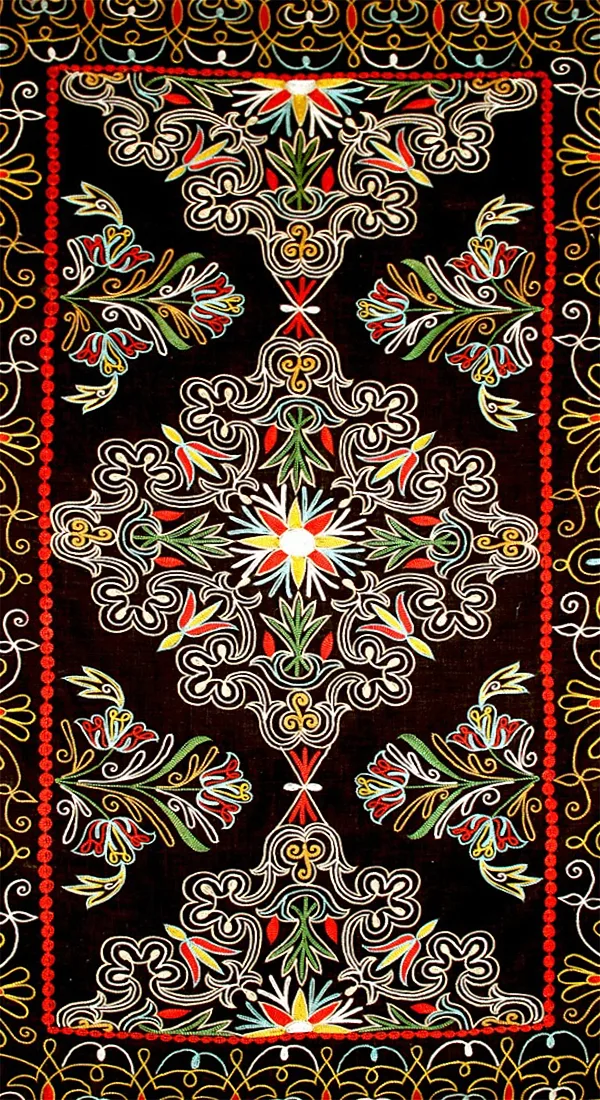
Among Azerbaijan’s rich traditions of applied art, tekelduz (takaldouz) embroidery holds a distinctive place, having developed in close association with the country’s silk-making and needlework heritage. Noted for its decorative style, intricate patterns, delicacy and technical finesse, the craft has evolved over centuries into a vivid expression of national artistic taste.

The motifs found in tekelduz pieces are rich in natural imagery, floral ornamentation and symbolic elements, reflecting the aesthetic sensibilities and creative vision of the artisans who produce them.

The craft has endured through the traditional master-apprentice system and within family settings, where its techniques have been passed down from one generation to the next. Historically, both women and men practised tekelduz, producing pieces in domestic workshops and small ateliers that were widely used in everyday life - adorning garments, household textiles and decorative objects alike.

Delicate and finely worked tekelduz pieces have attracted interest not only locally but also internationally, making a notable contribution to the recognition of Azerbaijani craftsmanship abroad.

Today, the tradition continues to be sustained in various parts of the country - particularly in the Shaki region - where it is preserved as an important element of the national cultural heritage.