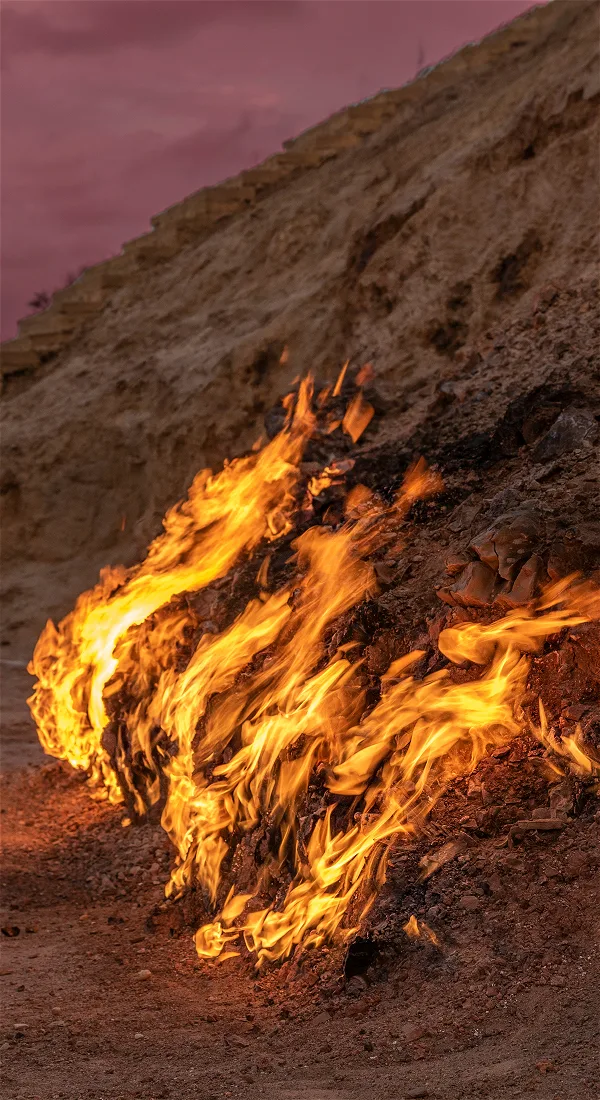
Located in the Surakhani settlement of Baku, the Ateshgah Fire Temple has long been one of Azerbaijan’s most renowned landmarks. The Absheron Peninsula, where the monument stands, is rich in underground gas and oil deposits; in the past, these lay so close to the surface that they ignited naturally, giving the region its enduring epithet, the “Land of Fire”.
Built in the 17th and 18th centuries in such a setting, the Ateshgah attracted fire-worshipping pilgrims from both the Near and Far East. They lived in the surrounding cells and carried out rituals in accordance with their religious beliefs.
Today, the site still bears 21 inscriptions, written primarily in Devanagari script (Sanskrit), as well as in Gurmukhi - the script associated with Sikh tradition - and Persian. These inscriptions testify to the Ateshgah’s role as a shared place of worship for communities of diverse religious and ethnic backgrounds.
The Ateshgah Temple and its naturally emerging flames attracted not only pilgrims, but also merchants, scholars, writers, diplomats and travellers from Europe and the Near East. The site was described in detail in numerous paintings, travel accounts and memoirs.
Among those who visited were the German traveller Engelbert Kaempfer in the late 17th century, the prominent English public figure, traveller and writer Jonas Hanway in the 18th century, as well as other explorers such as Villot and Lerch at various times.
The Ateshgah was not only a place of worship but also an important stop along the historic Silk Road, serving as a centre of trade and cultural exchange. Merchants arriving from South Asia made extensive use of the site and took particular care to ensure the temple was maintained in good condition.
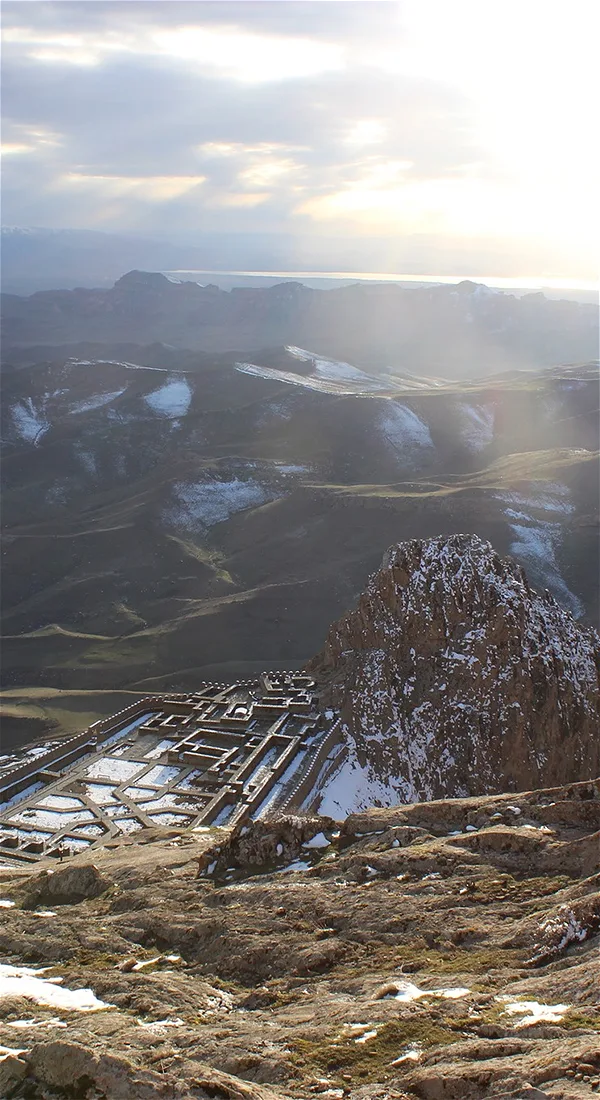
In architectural terms, the Ateshgah reflects a number of defining features of the Absheron school of architecture. The temple complex comprises 24 cells arranged in a pentagonal formation, with a guest chamber known as the Balakhana positioned above the entrance portal.
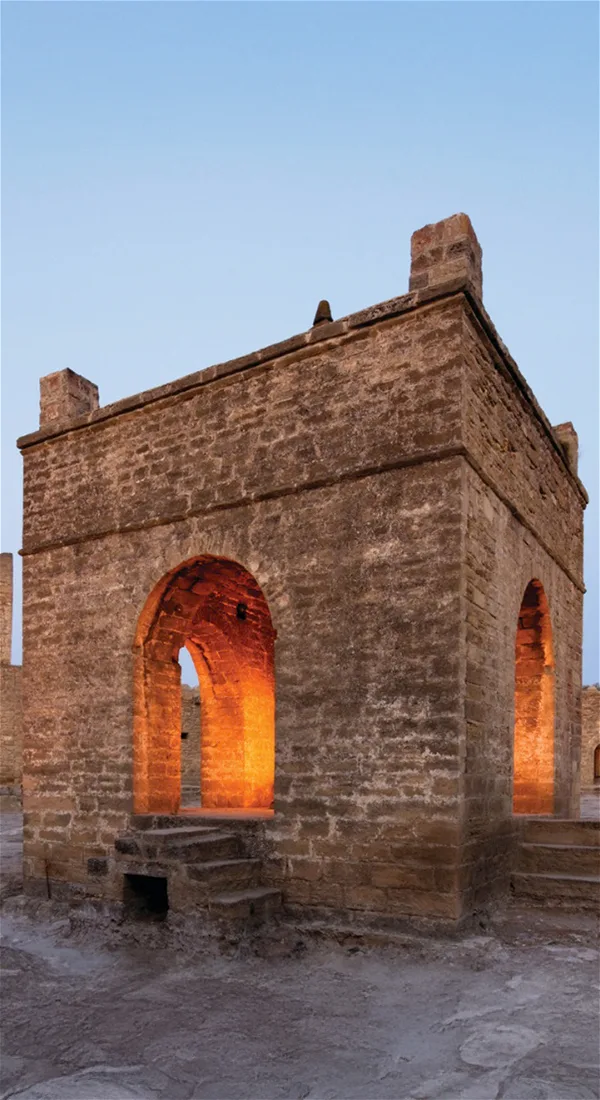
At the centre of the inner courtyard stands the main fire altar, known as the Chahartagh, constructed in keeping with traditional Absheron and Zoroastrian architectural principles. The courtyard also contains a cremation area, additional fire altars, wells and remnants of historic gas lines.
Today, visitors to the Ateshgah gain a clear understanding of why Azerbaijan is known as the “Land of Fire” and the true origins of the country’s association with natural flames.
In recognition of its role in Azerbaijan’s cultural heritage, the site was designated in 2007 as the Ateshgah Temple State Historical and Architectural Reserve.